Rental Home Construction in Kerala: An Investor Checklist
 Renovation
Building to rent is a different project from building to live in. Rental home construction Kerala investors get right is planned around tenants, maintenance and paperwork, not around the owner's personal taste. The plot, the unit mix and the finishes all need to earn their place over fifteen or twenty years of hard use.
This checklist sets out the decisions that matter most, in the order you will face them. It is written for owners in and around Kochi, including families abroad who will manage the property from a distance.
Key Takeaways
- Choose the plot for tenant demand first: proximity to IT parks, colleges, hospitals and public transport matters more than view.
- Two 2BHK units on ground plus first floor with separate entries is a flexible, easily let format on a typical Kochi plot.
- Give every unit its own electricity meter, water tank and sump connection from day one.
- Specify durable, low maintenance finishes and plan service access so repairs never mean breaking good work.
- Budget on realistic costs and vacancy, keep approvals clean and collect full handover documents before the final payment.
Choose the Plot and the Unit Mix
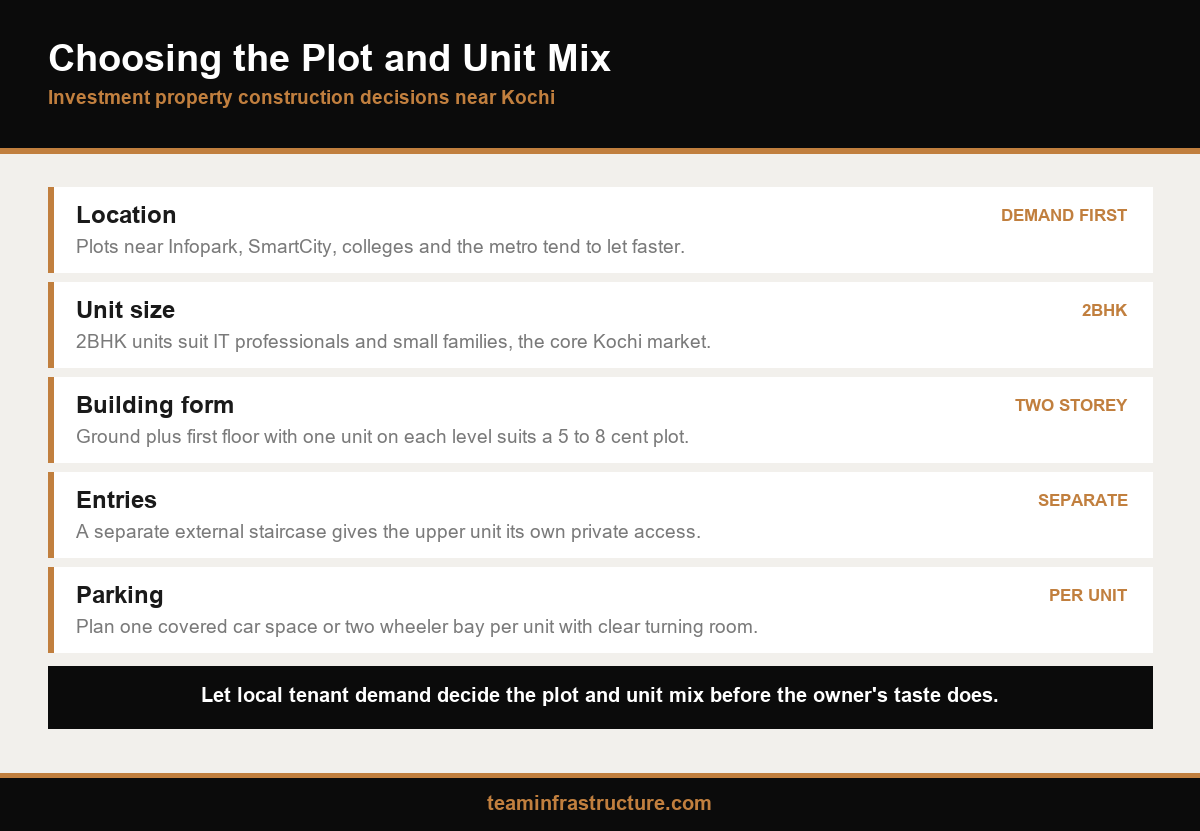
Rental demand in Kochi clusters around employment and education. Plots within a short commute of Infopark at Kakkanad, SmartCity, the Kalamassery industrial and college belt, the Vyttila mobility hub and the metro corridor tend to let faster than equally priced land further out. Before buying, spend an evening checking listings in the area and ask local brokers what actually rents and how quickly.
The unit mix follows the demand. Young IT professionals and small families are the core market near the tech parks, and they look for 2BHK units with a decent kitchen and covered parking. Near colleges, smaller 1BHK units or shared layouts may suit better. Larger 3BHK homes let well to settled families but take longer to fill and attract fewer applicants.
On a typical 5 to 8 cent plot, a ground plus first floor building with one 2BHK on each level is a proven format. A separate external staircase for the upper unit gives each tenant a private entry and keeps the two households independent. It also lets you live in one unit later, or let both, without any change to the building.
Think about parking early. Each unit should have at least one covered car space or a clear two wheeler bay, and the gate and turning space should allow both tenants to move vehicles without asking the other.
Check the plot itself with the same care you would for a family home. Road width, access for a car in the monsoon, drainage, a reliable water source and the distance to the nearest bus stop or metro station all show up in the rent you can charge. A plot that floods or has a narrow lane will sit empty longer, however good the building on it.
Design the Layout Tenants Actually Want
Good Kerala rental home design is plain and practical. Tenants near IT parks value good cross ventilation, a bedroom large enough for a work desk, a utility area for a washing machine and enough built in storage that they do not need to buy wardrobes. Open living and dining spaces photograph well and are easy to furnish.
Attached bathrooms in both bedrooms are now expected in 2BHK units at most rent levels. Keep the wet areas stacked vertically between floors, so plumbing runs straight and any leak is easy to trace. Place the kitchen against an external wall for exhaust and gas cylinder access.
Avoid features tenants will not pay for. False ceilings with complex lighting, feature walls in delicate materials and large glazed areas facing west add cost and maintenance without adding rent. Spend instead on good windows, mosquito mesh, adequate sockets and points for an air conditioner in each bedroom.
Our guide to layout planning for Kochi homes covers room proportions and orientation in more detail. The same principles apply, with one difference. In a rental, every room must work for a stranger, not just for your own family.
Separate Services and Durable Finishes
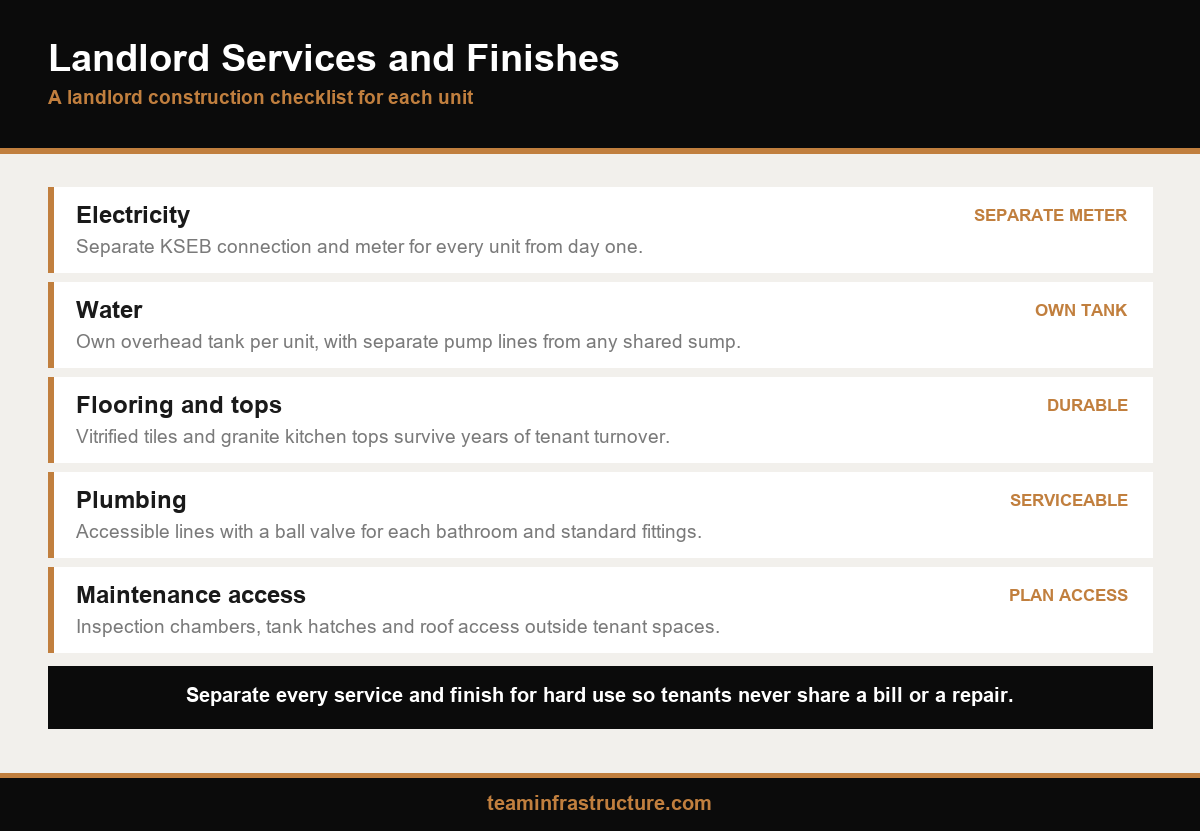
Shared services are the most common source of landlord disputes. Give each unit its own electricity connection and meter from the Kerala State Electricity Board, its own overhead water tank and, where a municipal supply exists, its own water connection. A shared sump is acceptable if the pump and lines to each tank are separate and metered.
Separate gas cylinder bays, separate inverter wiring and separate letterboxes complete the picture. Each tenant pays for exactly what they use, and you never have to calculate splits or chase arrears between households.
Finishes should be chosen for twenty years of turnover. Vitrified tiles, granite kitchen tops, aluminium or uPVC windows and good quality enamel or washable emulsion paint all wear well. Use concealed but accessible plumbing with ball valves for each bathroom, and branded CP fittings that can be replaced easily. Our article on choosing materials for a home lists the trade offs in more detail.
Plan maintenance access as carefully as the rooms themselves. Provide inspection chambers at every drain junction, an access hatch to the overhead tanks, a ladder point for the roof and a clear route for a plumber to reach the pump without entering a tenant's flat.
Waterproofing deserves particular attention in a rental. Treat the terrace, sunshades, bathrooms and the junction of the external staircase with the main wall properly during construction. A leak that a resident owner would notice early may go unreported by a tenant for months, and the repair then costs far more than the original treatment would have.
Approvals, Contracts and Compliance
A rental building must be fully legal to be lettable, insurable and saleable later. The building permit from the panchayat or municipality, issued under the building rules administered through the local self government department, should show the number of dwelling units you actually intend to build. Building two units on a single unit permit creates trouble at occupancy and at resale.
Ensure the approved drawings, setbacks and parking provision match what is built. After completion, obtain the occupancy certificate and the building number, then apply for separate electricity and water connections for each unit. Property tax is assessed on the completed building, so keep the assessment documents with the title deeds.
Your construction contract matters as much as the drawings. Fix the scope, specification and payment stages in writing. Our guides to contract types and payment schedules and to the documents worth demanding before you sign set out what a sound agreement includes.
Once built, every tenancy needs a written rental agreement and police verification of tenants as required locally. Ask your builder whether they can recommend local property managers if you will be abroad, but keep the management relationship separate from the construction contract.
Budget Honestly and Plan the Handover
Real estate construction services can price the building, but only you can judge the return. Start from realistic construction costs for the specification you want, then add compound wall, gate, sump, septic system, connection fees, approvals and professional fees. These often add a meaningful share to the headline building cost.
Run your numbers on a conservative rent, at least one month of vacancy per unit per year, annual maintenance and repainting every five to seven years. Rental yields in Kochi vary widely by location and specification, so use local evidence rather than optimistic figures, and treat any projection as an estimate rather than a promise.
At handover, collect a complete file before the final payment. It should include the as built drawings, plumbing and electrical layouts with conduit routes, warranties for pumps, inverters and fittings, waterproofing guarantees, the occupancy certificate and meter documents for each unit. Keep a copy digitally so a property manager or a future buyer can find everything quickly.
A short defects inspection before tenants move in, and again after the first monsoon, catches seepage and drainage issues while the builder is still engaged.
Finally, set aside a small maintenance reserve from the first year of rent. Pumps, taps, door hardware and paint are the items that fail first in a let property. Having the money ready means repairs happen quickly, tenants stay longer and the building keeps its condition for the next letting and any eventual sale.
Conclusion
A rental building succeeds on unglamorous decisions. Choose a plot tenants want, design units that work for strangers, separate every service, finish for hard use and keep the approvals and paperwork clean from the start.
Get those foundations right and the building will let easily, cost little to run and hold its value at resale. To plan a rental project on your plot, talk to our team in Tripunithura.
Costs, timelines and rental assumptions are indicative for Kochi and Ernakulam district as of October 2026, are not a forecast of returns and do not constitute a quotation.
Frequently Asked Questions
What should I plan first for rental home construction Kerala projects?

Is a ground plus first floor building with two units a good rental format?
Should each rental unit have its own electricity meter and water tank?
Which finishes work best in a rental home?
What approvals do I need for a two unit rental building?
What documents should I collect at handover?